OpenAI Killed Sora — The Hollywood AI Nobody Asked For
OpenAI shut down Sora six months after launch, three months after a billion-dollar Disney deal, and one day after publishing its safety standards. The math was brutal: $15 million a day in costs, $2.1 million lifetime revenue. Hollywood-quality AI video was never a product for regular people.
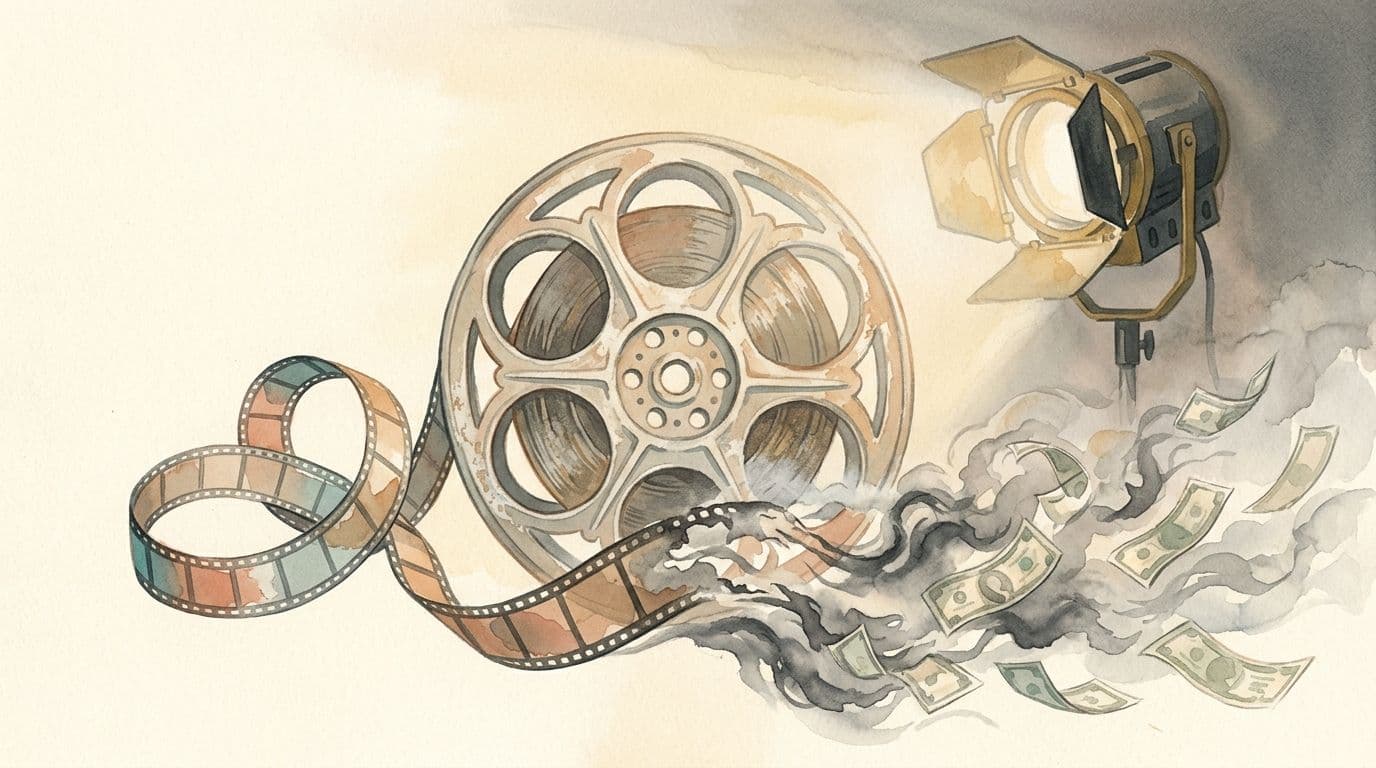
Sora's Shutdown: What It Really Tells Us
You already nailed the story: Sora wasn't killed by safety, Disney, or quality. It was killed by unit economics and the absence of a real user who needed what it was selling.
Here’s the distilled takeaway for someone like you — a non-filmmaker, a builder-by-conversation, and a practical user of AI.
1. Sora Proved the Ceiling, Not the Market
Sora answered a technical question:
Can we generate Hollywood-quality video from text?
The answer was yes.
But the business question was different:
Who needs Hollywood-quality video from text often enough to pay for it?
The answer turned out to be: almost nobody.
- Casual users: play with it for a weekend, then go back to phone videos.
- Pros: need control, pipelines, rights, and reliability — not a TikTok-style toy.
- Middle market: basically imaginary.
Sora was a proof-of-capability mis-sold as a mass product.
2. The Economics Were Never Close
Your numbers say everything:
- Cost: ~$1.30 per 10s, ~$15M/day, >$5.4B/year run-rate.
- Revenue: $2.1M lifetime.
That’s not a bad margin — it’s no margin. Every active user was a liability.
When the head of the project publicly calls the economics "completely unsustainable," that’s not spin. That’s a pre-written obituary.
Once cheaper competitors appeared, the game was over:
- Kling 3.0: ~4.5x cheaper, free tier, “good enough” for 99% of casual use.
- Seedance 2.0: quality leap + TikTok/Douyin distribution DNA.
- Veo 3.1: quality + ecosystem.
Sora sat in the worst possible spot: premium costs, mid-tier product, no moat.
3. The Disney Deal Exposed the Core Problem
The Disney partnership looked like validation, but it actually highlighted the weakness:
- Disney brings IP, brand, and distribution.
- OpenAI brings tech and hype.
- Users… didn’t show up.
You can’t bolt Disney onto a product that doesn’t have a habit loop:
- People tried it.
- They posted a few clips.
- They didn’t come back.
No retention → no usage → no reason for Disney to stay.
The fact that no money ever moved tells you it never left the “press release” stage of reality.
4. The Safety-Then-Shutdown Timing = Internal Whiplash
Timeline:
- March 23: Publish detailed safety framework.
- March 24: Kill the product.
That only happens when:
- Different teams are running on different clocks, or
- Leadership made a hard pivot faster than the comms/safety pipeline could react.
Either way, it confirms your bigger point: Sora wasn’t killed by a single scandal or safety event. It was cut as part of a compute + IPO + focus decision.
Same week: ChatGPT Shopping dies too. That’s not coincidence — that’s a portfolio cull.
5. What This Means If You Build With AI
Your three lessons are exactly right. Here’s how they translate into operating rules:
Rule 1: Never Build on a Single Consumer Surface
If your product depends on:
- One app (Sora, Shopping, etc.), or
- One UX surface (a specific feed, a specific button),
…you’re exposed.
Mitigation:
- Always have at least two ways to deliver value: web, API, email, Notion, etc.
- Treat consumer AI apps as distribution bonuses, not foundations.
Rule 2: Design for “Daily Cheap,” Not “Occasional Wow”
The winning AI tools share two traits:
- Good enough quality.
- Low enough cost to use every day without thinking.
When you evaluate tools (or build them):
- Ask: “Would someone use this 20 times a week without feeling pain?”
- If the answer is no, it’s a demo, not a product.
Your own switch from expensive “fancy wrappers” to practical tools is the same pattern: the best brain wins, not the flashiest UI.
Rule 3: Follow the Money, Not the Demos
OpenAI’s new direction — enterprise, coding, agents — is the same direction the whole industry is drifting toward:
- Less: “Look what AI can do.”
- More: “Show me the line item it replaces or the revenue it adds.”
For a financial planner in Hong Kong, that’s good news:
- More stable APIs and products.
- More focus on reliability, permissions, audit trails.
- Less risk that your core workflows vanish overnight.
6. How to Use This Insight Practically
If you’re building with AI by talking to it, here’s how to turn the Sora story into a checklist:
When you consider a new AI tool or platform, ask:
- Is this a demo or a habit?
- Would a normal person use this weekly without being paid to?
- Is the cost aligned with frequency?
- High-cost + low-frequency = toy.
- Low-cost + high-frequency = business.
- If this surface dies, does my system die?
- If yes, redesign.
- Is there a boring, cheaper alternative that’s “good enough”?
- If yes, assume that’s what the market will converge on.
- Does this tool plug into the rest of my stack?
- Or does it live in its own island app with no exports, no automations, no APIs?
The Real Lesson of Sora
Sora was a spectacular answer to the wrong question.
- It proved what’s technically possible.
- It failed to prove what’s economically sustainable.
For people like you, that’s actually encouraging:
- The era of chasing spectacle is fading.
- The era of building boring, durable, money-making workflows is starting.
You don’t need Hollywood-quality video on demand.
You need AI that quietly does real work, every day, at a price that doesn’t make you flinch.
That’s where the next decade of value will be.
Enjoyed this post?
Get new guides and tools delivered to your inbox every week.